

New Normal: Surplus
Market is in a surplus and about to get more

In this report:107 days of war, a billion barrels of lost production, a deal signed on borrowed time, and a market that has not yet worked out what comes next. We must look at the fine details here- new maps from IRGC, The timeline components of the MOU and what is not fixed.
Articles
Iran’s top security body confirms Iran-US finalization of MoU
Oil prices sink on announcement of Iran deal
U.S. and Iran reach deal to extend ceasefire and open strait
Beyond Oil: The Strait Of Hormuz And The Global Food Risk
A Different Kind of Oil Shock: Why the 2026 Hormuz Crisis May Not Enrich the Gulf, and What That Means for Germany
How the closure of Hormuz has opened up energy opportunities
Is Argentina’s giant shale play the next Midland Basin?
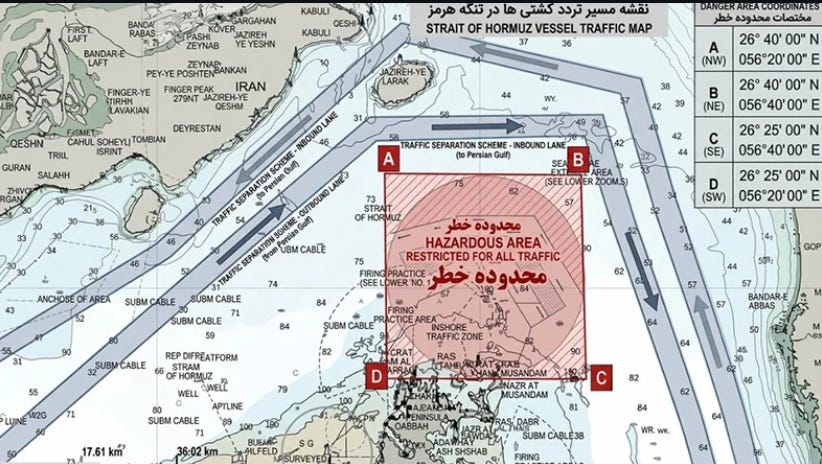
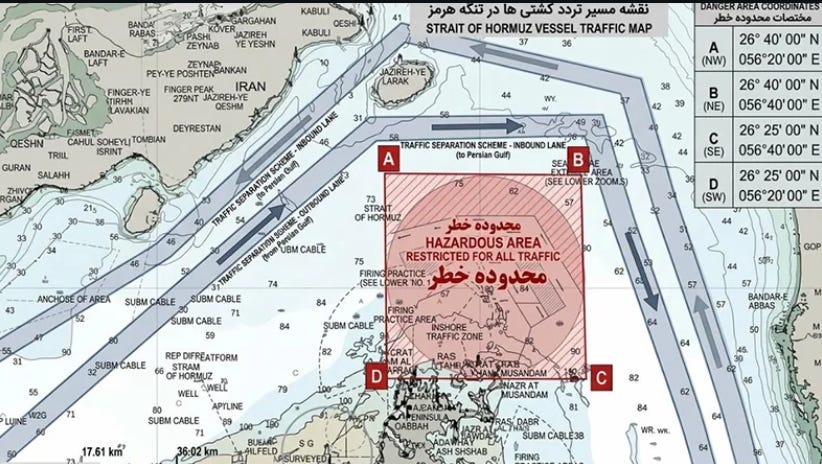
Source: IRGC Navy
View
My critical assessment read of where are is below. In short, we need to make it to Fridays June 19th signing in Switzerland without major incident. But there is one actor that could completely kybosh this entire deal. Netanyahu. The US MUST, as part of this MOU restrain Israel. It is important to note that we are in NO WAY out of the woods. The material changes today are on warfare peace and a restart to transit. This is the largest positive step so far. But the industry has made other arrangements and has moved on to a large degree already. See ‘No Fix’ section below.
We are in a 30-day window where the SOH may be open, but there are still constricted shipping factors due to the de-mining. See above for the IRGC shipping map. For a comprehensive tear sheet, see ‘The Deal’ section below.
1. Iran declared itself the winner. Araqchi on state TV: Iran emerged stronger. Sovereignty of the Strait belongs to Iran and Oman. Iran will secure safe passage. This is a country that extracted $300bn reconstruction commitment, $24bn frozen funds, oil sanctions suspension, US forces withdrawal, and a permanent seat at the table on nuclear issues - while keeping its missile programme off the agenda entirely.
2. The Strait reopens under Iranian arrangements. Article 5 of the 14-point draft: “Reopening the Strait of Hormuz within 30 days under Iranian arrangements.’’ The PGSA (Persian Gulf Strait Authority) that Kpler’s shipping analyst called out as Iran’s attempt to legitimise control - that is what “Iranian arrangements” means. Iran did not lose the strait. It monetised it.
Navigation is opening up. The actually straits that can be safely passed is an extremely tight corridor between Larak Island and Qeshm Island. The minefield illustrated off the Oman coast also clearly highlighted. The work begins on Friday (maybe??) for mine clearance. It will be interesting to find out how much cooperation will happen between the IRGC and US Navy forces to actually clear this area. The Pentagon’s assessment was this would take 6 months. Trump wants it done in 30 days.
3. Tolls suspended for 60 days - not abolished. Trump NYT interview: MOU suspends tolls for 60 days. Not permanently. The tollgate model is paused, not dismantled. At the end of the 60-day negotiation window, if final deal is not reached, tolls resume. Iran’s FM confirmed: if interim deal not implemented, no nuclear talks. The leverage is explicit and retained.
4. Israel is not on board. Israeli Defence Minister opposes IDF withdrawal from Lebanon. Has told Trump directly. If Iran attacks Israel over Lebanon, Israel strikes Iran. Trump reached deal over Netanyahu’s objections - described him as “very difficult.” The Lebanon front is not closed. One incident there reopens the military dimension. The US posture towards Israel will now become interesting.
5. Missile programme untouched. Fars News confirmed today: no clause on Iran’s missile and drone programme. Not in current understanding. Not scheduled for later stages.
6. $300bn reconstruction commitment. Article 7: US and allies required to submit reconstruction plans worth at least $300bn. This is Iran extracting a Marshall Plan as a condition of the deal. The economic architecture of the new relationship is Iranian reparations from the West. If you make a mess of the place, you gotta pay the cleaning bill!
State of market today!
Despite the shoddy shape of inventories, stock and SPR’s, the current flows are not what you think. See ‘No Fix’ section.
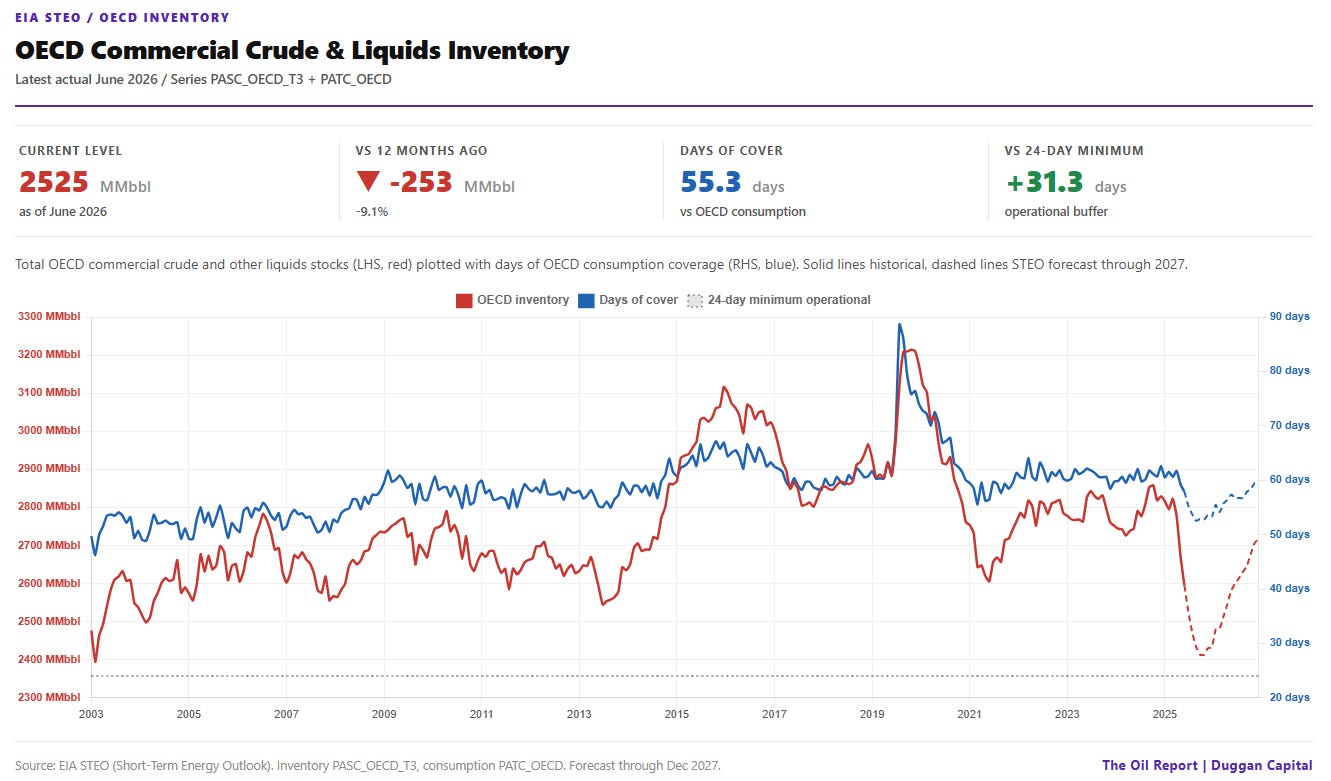
Commercial inventories in the OECD group run dry in 55 days from today. That is an actual tank bottom on Commercial stocks. See chart below. It is widely discussed now that stocks only need to draw down another 20 days of supply until the actual pipes and system stops functioning normally on commercial stocks. So they are currently being topped up from the SPRs around the world/OECD.
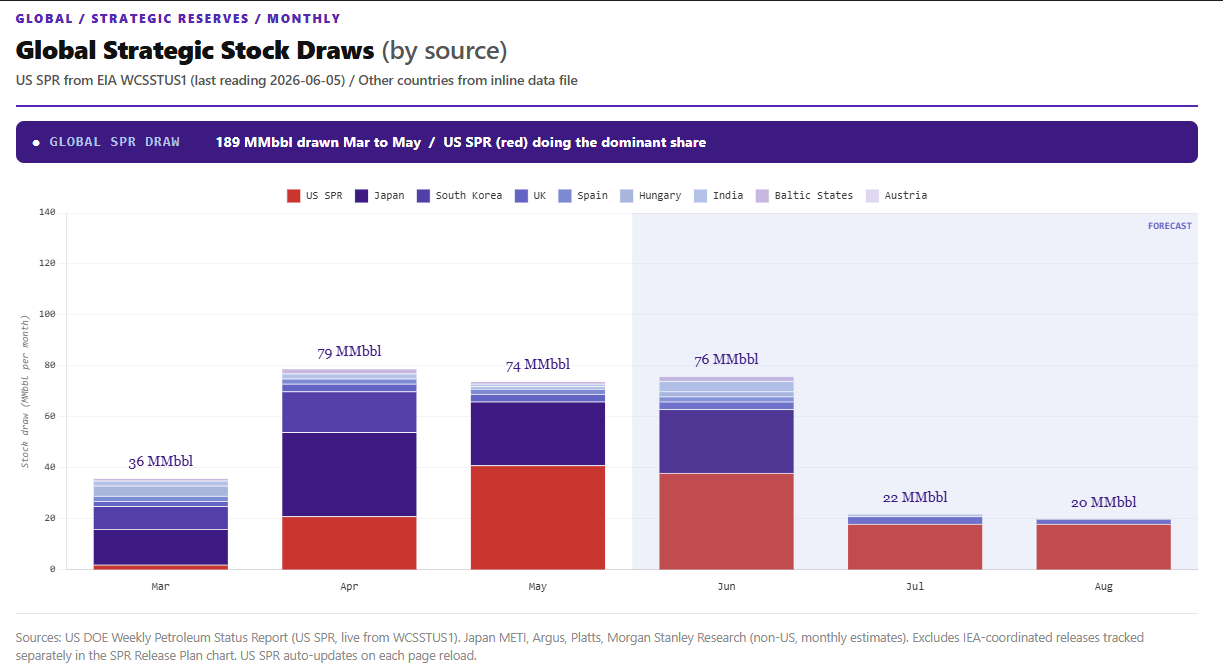
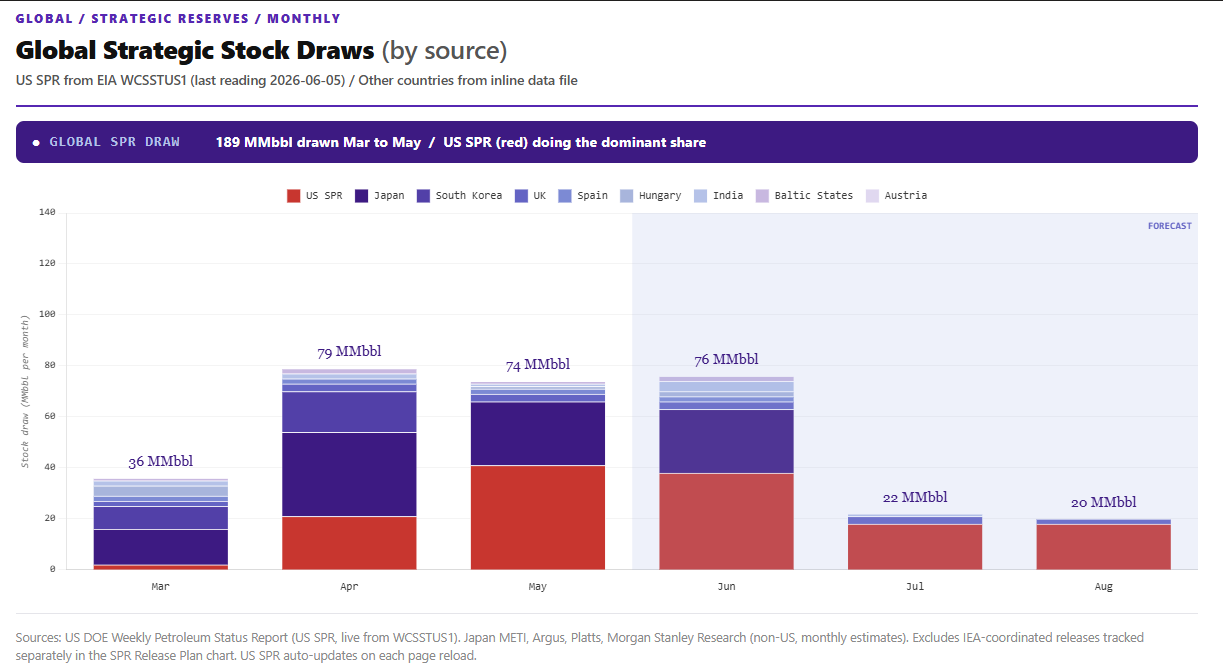
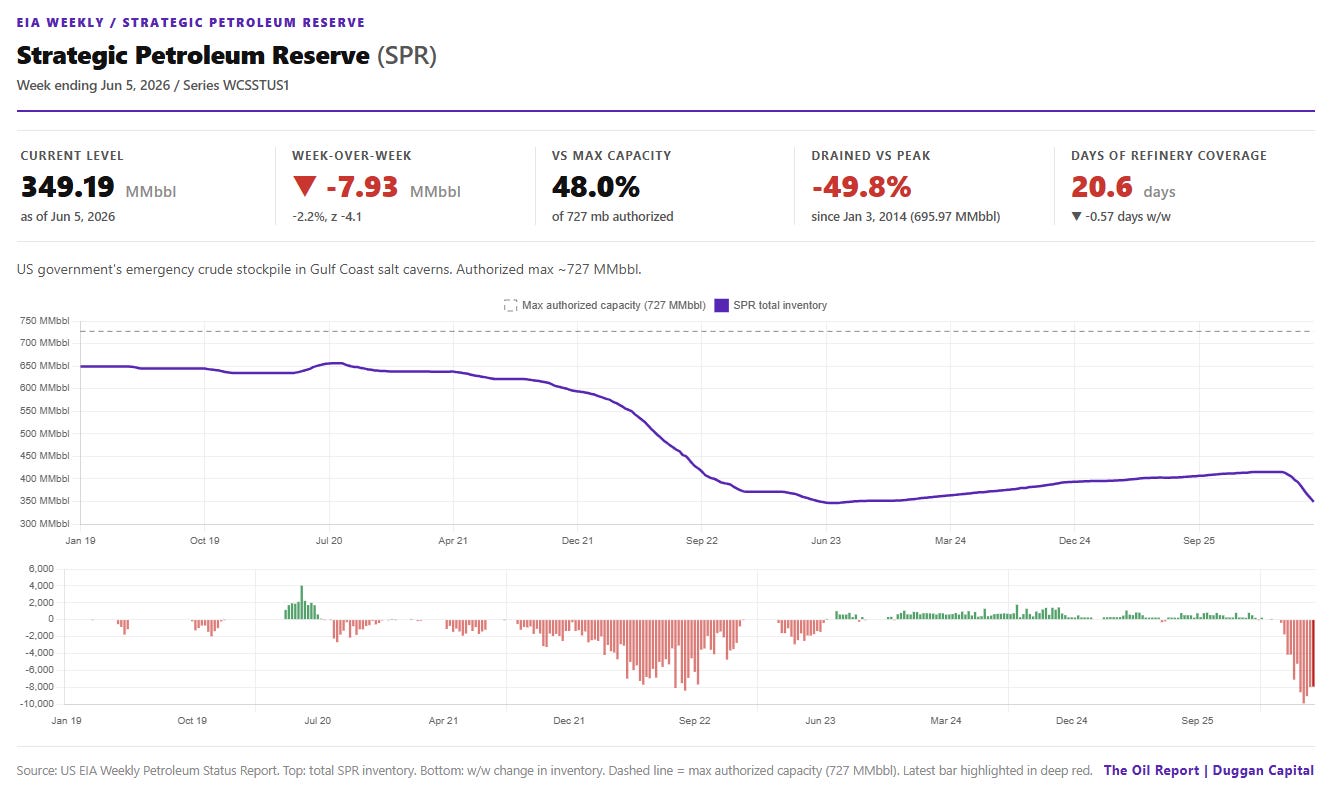
The OECD coordinated SPR release. The OECD came together in April and agreed to release 400mb into the market from their collective SPR reserves. The US portion is 172mb, scheduled to be fully released by about July 12th. See chart. This is the reserves release that has worked to keep a cap on oil prices to date, combined with a softening of shipping where we now have a meaningful amount of oil transiting daily with the help of CENTCOM . More with maps and Kplr data below.
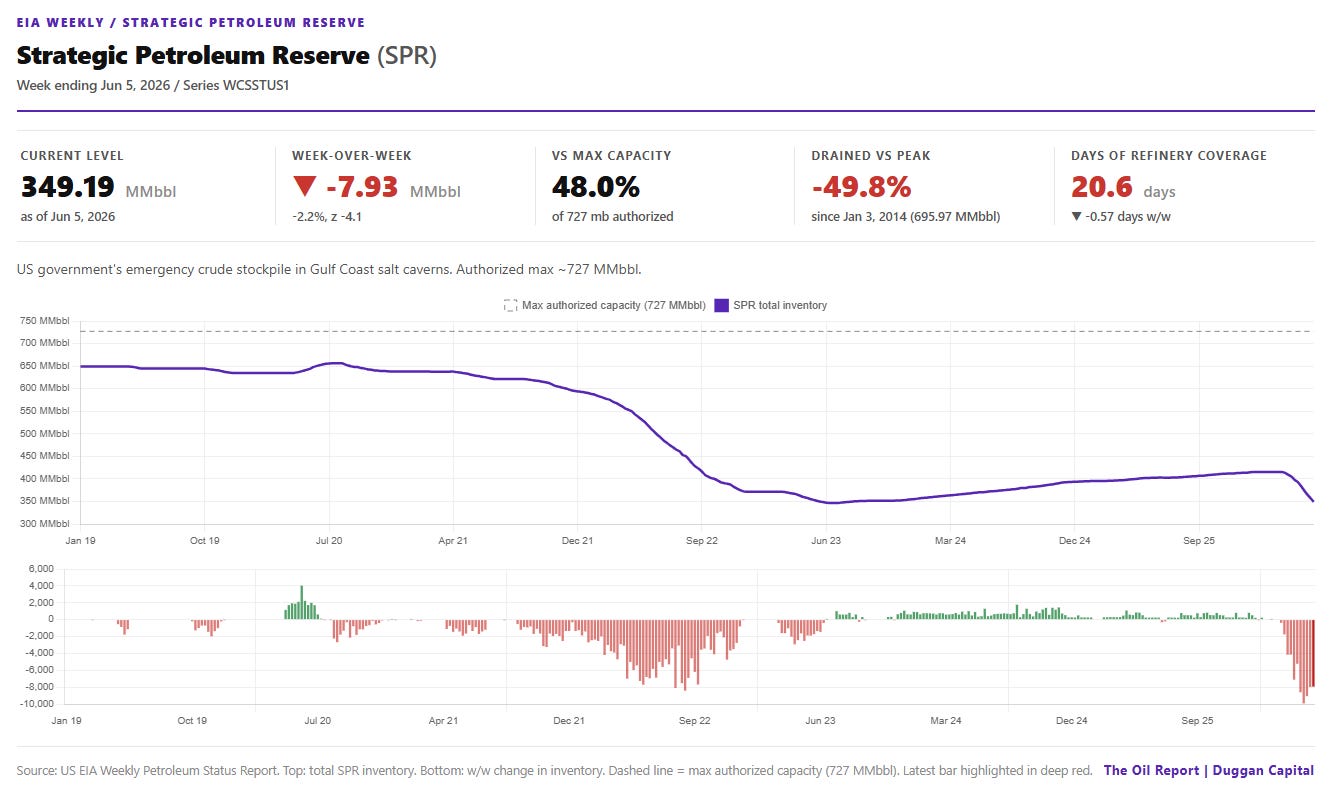
US SPR RESERVES. The US SPR is drawing down at the fastest pace in history. It is currently just below 48% full. See chart below. The Department of Energy as of 10th June 2026 has issued an RFP for the remaining 40million barrels to market.
The Deal: What is agreed?
Pakistan announced the framework on June 14th after 107 days of conflict. Qatar facilitated. The formal signing is scheduled for Friday, June 19th in Switzerland. The agreement is a memorandum of understanding - an interim framework, not a final deal.
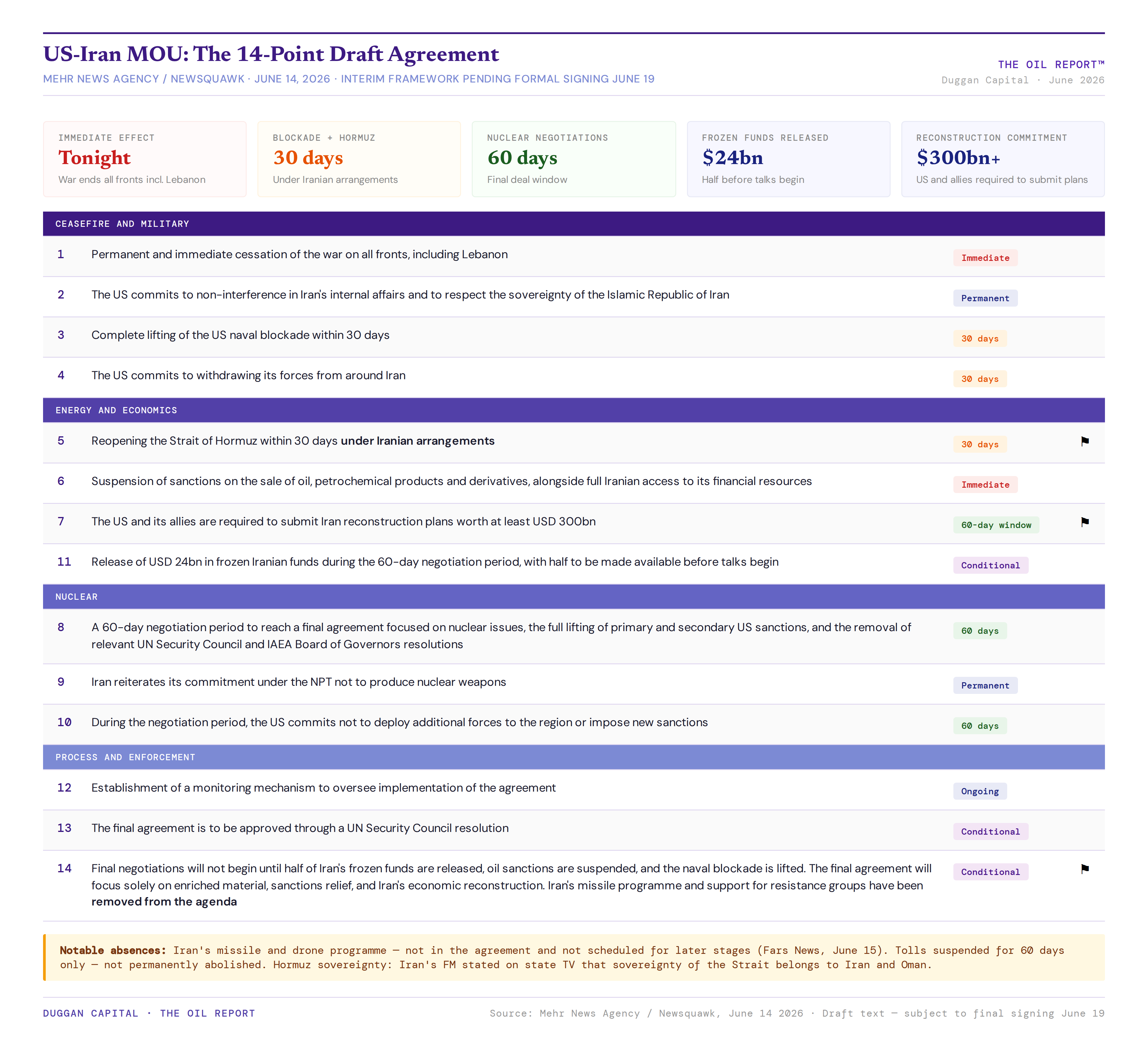
The 14-point draft published by Mehr News Agency sets out the terms. The war ends immediately and permanently on all fronts including Lebanon, however Israel are not recognising this deal MOU. The US naval blockade lifts within 30 days. The Strait of Hormuz reopens within 30 days - under Iranian arrangements. Oil and petrochemical sanctions are suspended. $24bn in frozen Iranian funds are released during the 60-day window, half before talks begin. The US and its allies are required to submit reconstruction plans for Iran worth at least $300bn. A monitoring mechanism is established. The final agreement requires UN Security Council approval.
The 60-day negotiation period that follows will focus on Iran’s nuclear enrichment programme, the disposal of highly enriched uranium, and the full lifting of primary and secondary sanctions. Iran’s missile and drone programme is not in the agreement and is not scheduled to be raised in later stages.
Not fixed
Keep reading with a 7-day free trial
Subscribe to The Oil Report to keep reading this post and get 7 days of free access to the full post archives.